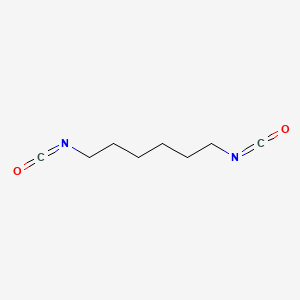

Hazard Assessment Summary Table Help CSV format XLSX format
| Assessment Type | Carcinogenicity | Mutagenicity | Reproductive Toxicity | Developmental Toxicity | Endocrine Disruption |
|---|---|---|---|---|---|
| Hazard Assessment Level |
High |
Low |
Insufficient data
|
Insufficient data
|
Insufficient data
|
| Assessment Type | Acute Toxicity | Systemic Toxicity - Single Dose | Systemic Toxicity - Repeated Dose | Neurotoxicity - Single Dose | Skin Sensitization | Respiratory Sensitization | Skin Irritation | Eye Irritation |
|---|---|---|---|---|---|---|---|---|
| Hazard Assessment Level |
Very High |
Medium |
Insufficient data
|
Insufficient data
|
High |
High |
High |
High |
| Assessment Type | Acute Aquatic Toxicity | Chronic Aquatic Toxicity |
|---|---|---|
| Hazard Assessment Level |
Insufficient data
|
Insufficient data
|
| Assessment Type | Persistence | Bioaccumulation |
|---|---|---|
| Hazard Assessment Level |
Insufficient data
|
Insufficient data
|
| Assessment Type | Reactivity | Flammability |
|---|---|---|
| Hazard Assessment Level |
Insufficient data
|
Insufficient data
|
Hazard Diagnostic Modules
The Hazard Diagnostic Module consists of the following four computational chemistry methods. The predicted toxicity alerts are for reference only and should be evaluated together with other available data.
- Substructure Alerts
- Similarity Alerts
- Read-Across
- Classification Models
| Smarts | Endpoint | Source | Author | Journal |
|---|
Safer Alternatives
Safer alternatives are referenced from current safer chemical databases and software logic, divided into the following three categories:
- The system compiles industrial uses of chemicals from the US EPA ChemView database and integrates them with the US EPA Safer Chemical Ingredients to create a safer alternatives list for each chemical. Chemicals may have multiple industrial uses, so the system uses an accordion-style display. Click the 'Suggested Safer Alternatives' tab to expand the table. If the use is broad (e.g., 'Commercial use'), the list may include more specific uses (e.g., 'Solvent'). If no information is available, refer to 'By Industrial Use (Full List)' for manual filtering.
- Categorized by industrial use (full list). This list contains safer chemicals for industrial uses, not necessarily replacements for the chemical on this page. You may filter by industrial use via the search bar at the top right of this tab, e.g., filter by 'Antioxidants'. Source: Safer Chemical Ingredients List
-
Categorized by structural similarity, requiring:
- Find chemicals with similar functional groups based on structural similarity (Tanimoto coefficient ≥ 0.8), likely having similar functions.
- Chemicals identified as lower risk by risk assessment, such as level 3, level 4, or insufficient data.
- Based on real-world case studies. Source: OECD SAAT
Based on substructure, the system lists chemicals with risk levels 3 (usable but safer alternatives may be sought), 4 (safer chemicals), or insufficient data (U: not enough data to determine risk level). Information
Download:
CSV format
XLSX format
| Name | CAS | Industrial Use | Safety | Risk Level | Data Source | Notes |
|---|
Download:
CSV format
XLSX format
| Name | CAS | Industrial Use | Safety | Risk Level | Data Source | Notes |
|---|
Download:
CSV format
XLSX format
| Name | CAS | Industrial Use | Safety | Risk Level | Data Source | Notes |
|---|
Download:
CSV format
XLSX format
| Name | CAS | Industrial Use | Safety | Risk Level | Data Source | Notes |
|---|
Download:
SCIL (CSV)
SCIL (XLSX)
ZeroPM PFAS (CSV)
ZeroPM PFAS (XLSX)
SUBSPORT+ case alternatives (CSV)
SUBSPORT+ case alternatives (XLSX)
| Name | CAS | Industrial Use | Safety | Notes |
|---|
This chemical is not listed in the ZeroPM PFAS alternative assessment database.
SUBSPORT+ substitution case stories
Real-world substitution cases involving this chemical, from the SUBSPORT+ case story database (English records).
| Case | Role of this chemical | Alternative | Sector | Function | Implementation | Reason for substitution |
|---|---|---|---|---|---|---|
| Substitution of naphtha and hexamethylene diisocyanate in polyurethane-based paints | Substituted |
|
Manufacture of fabricated metal products, except machinery and equipment General manufacturing, e.g. machinery, equipment, vehicles, other transport equipment Building and construction work Other | Solvent | Full capacity — 2009 in Spain | other toxic effects skin/respiratory sensitizing |
OECD SAAT alternative case studies
Full list of OECD SAAT case studies (not filtered by chemical).
| Case Study Name | Link | Publish Date | Publishing Organization | Related Products | Description |
|---|